TIF Dispatch Area Preparedness and Staffing

Updated:
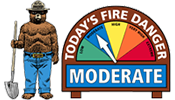
FDRA ERC BI FDR Forecast BI Forecast ERC Staffing Class Tomorrow's Response Level
Teton 33.49/percentile 23.0 / percentile High 26.74 /65.70 percentile 38.69/79.30 percentile 3 Moderate
Bridger 36.69/ percentile 26.74/ percentile Moderate 24.11/73.20 percentile 39.99/83.90 percentile 3 Moderate

Stage 1 Fire Restrictions Go into Effect Beginning July 22, 2026, for Teton Interagency Dispatch Area

(Western WY, July 21, 2026) — Stage 1 fire restrictions will go into effect for Grand Teton National Park, the Bridger-Teton National Forest and the National Elk Refuge beginning at 6:00 a.m. on Wednesday, July 22, 2026. The fire danger rating for the Teton Interagency Dispatch area remains at “high,” meaning wildfires can start easily and spread quickly.

Fire managers use a variety of factors to determine when fire restrictions need to be applied to public lands, including the moisture content of fuels (how dry grasses, shrubs and trees are); projected weather conditions (including temperatures and possible wind events); the availability of firefighting resources nationwide; and the occurrence of human-caused fires.

In Grand Teton National Park campfires are only allowed in designated metal fire grates. Campfires are never allowed on the National Elk Refuge.

For the Bridger-Teton National Forest, the following stage 1 fire restrictions apply:

  • Lighting, building, maintaining, attending, or using a fire (including fires fueled by charcoal or briquettes) is prohibited, except if it is in:

    • A permanent metal or concrete fire pit or grate that the Forest Service has installed and maintained at its developed recreation sites (campgrounds and picnic areas), listed in Forest Order # 04-03-26-304, Exhibit A.

    • A device solely fueled by liquid or gas that can be turned on and off used in an area that is barren or cleared of all flammable materials within three feet of the device.

    • A fully enclosed metal stove with a chimney at least five feet in length and a mesh screen spark arrestor with a screen opening of a ¼ inch or less used in an area that is barren or cleared of all flammable materials within 10 feet of the device.

The following stage 1 fire restrictions apply to all public lands within the Teton Interagency Dispatch area, including Grand Teton National Park, the Bridger-Teton National Forest, and the National Elk Refuge:

  • Smoking is prohibited, except in an enclosed vehicle or building, a developed recreation site, or while stopped in an area at least three feet in diameter that is barren or cleared of all flammable materials.

  • Welding, or operating acetylene or other torch with open flame is prohibited, except if in a cleared area of at least 10 feet in diameter and a chemical pressurized fire extinguisher (with a minimum 8 oz. capacity and rating of Class 2A) is kept with the operator.

Additionally, possessing, igniting, discharging or using any kind of fireworks or explosives is strictly prohibited on public lands.

Violations of these prohibitions are punishable as a Class B misdemeanor by a fine of up to $5,000 for individuals and $10,000 for organizations, or by imprisonment for up to six months, or both.

So far this year, Teton Interagency Fire personnel have extinguished 67 unattended or abandoned campfires. Abandoned campfires can quickly escalate into wildfires, and if your campfire sparks a wildfire, you can be held responsible for the cost of putting it out.

What you can do
During times of elevated fire danger and fire restrictions, the safest option is to not build a campfire at all. Dress warmly and use layers instead of relying on a campfire for warmth. If you choose to have a campfire where it’s allowed, have a plan for putting it out before ever lighting it, and:

  • Never leave a campfire unattended or abandoned.

  • Have a shovel and water bucket on hand.

  • Use several gallons of water to fully extinguish your campfire.

  • Drown, stir, feel and repeat until the ashes are cold to the touch.

  • Break up charred logs and cover all remains with dirt.

Other considerations

  • Do not park on tall grass as that grass can ignite when in contact with a hot vehicle.

  • If pulling a trailer, ensure your chains are clear of the ground as small sparks could start roadside fires.

  • If you come across an abandoned campfire and it is within your power, please put it out and contact Teton Interagency Dispatch to report its location.

For the latest fire updates, safety tips, and current fire restrictions, visit TetonFires.com. To report smoke or a fire, call the Teton Interagency Fire Dispatch Center at 307-739-3630.
 

FIRE RESTRICTIONS NOW IN EFFECT

Trail Closures will be in place for public safety

(Jackson, WY, July 23, 2026) — Contracted crews will implement 197 acres of hazardous fuels reduction in Phillips Canyon, near the BPA powerline corridor and west of Fish Creek Road on the Jackson Ranger District of the Bridger-Teton National Forest beginning Aug. 3 through Sept. 12, 2026, weather permitting. This work is part of a multi-year effort to reduce hazardous fuels in the Teton to Snake River Fuels Management Area.

For public safety, Phillips Canyon Fuels Reduction Project – Area and Trail Closure Order 04-03-26-303 will be in place Monday through Saturday of each week, starting Aug. 3. The closure includes portions of the Phillips Canyon Trail and Phillips Ridge Trail. Arrow and Phillips Pass trails will remain open throughout operations. There will be a phased reopening of trails as soon as practical and safe to do so.

Forest thinning improves forest health and reduces wildfire risk by using crews to remove small trees and other vegetation to reduce accumulated fuel load. These treatments can benefit ecosystems and people by reducing the probability of catastrophic fires, restoring healthy and resilient ecosystems, and protecting communities.

Crews to begin hazardous fuel reduction in Phillips Canyon on the Bridger-Teton National Forest

Wildland and Prescribed Fire Map

Kinky Creek

43.428487, -110.221765
Wildland Fire