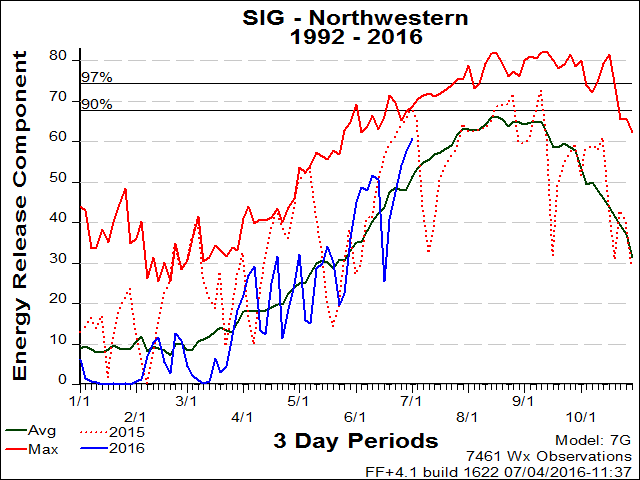
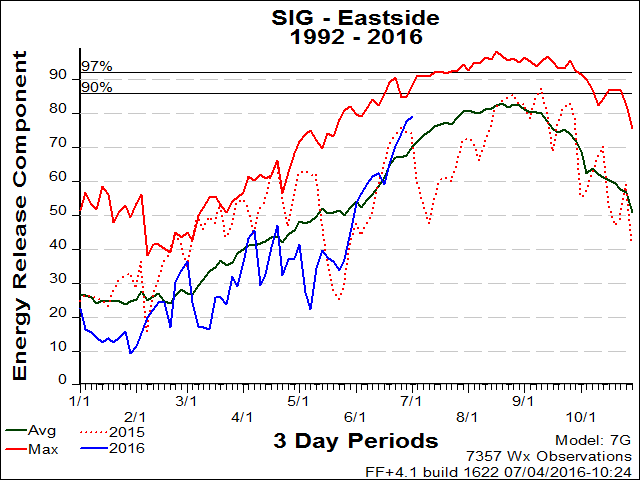
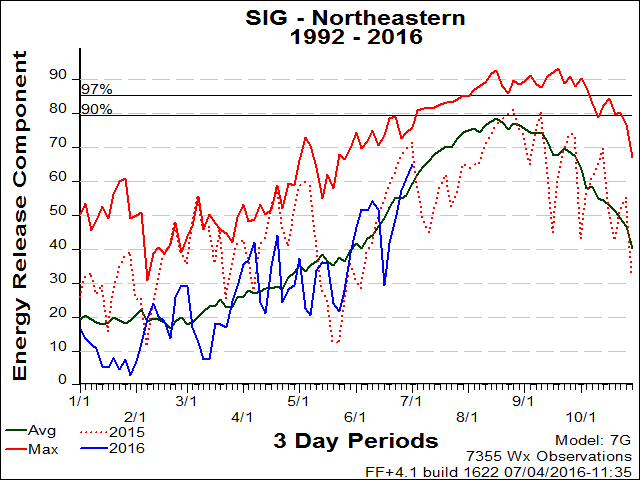
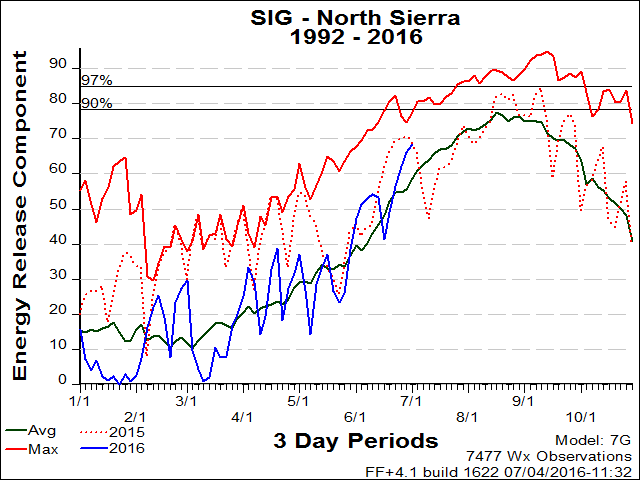
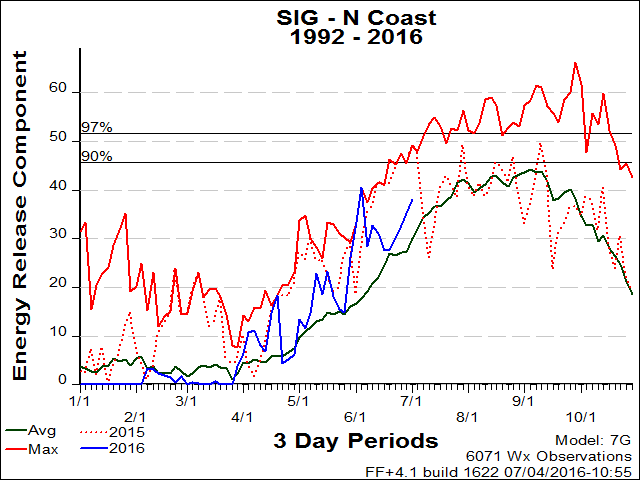
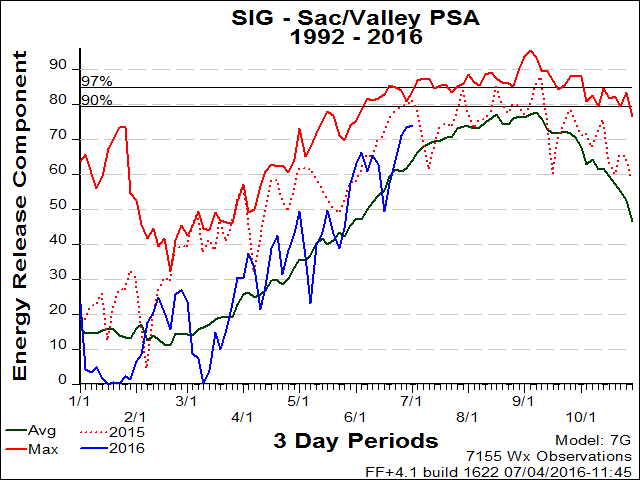
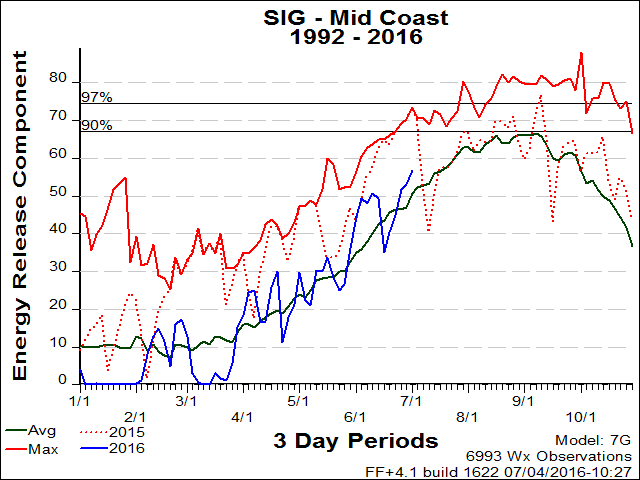
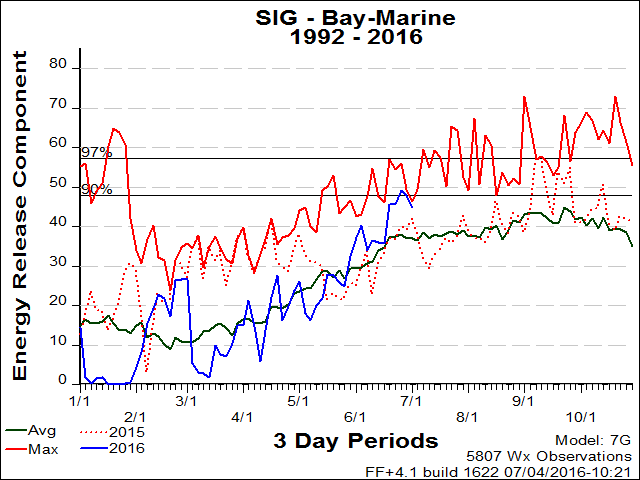
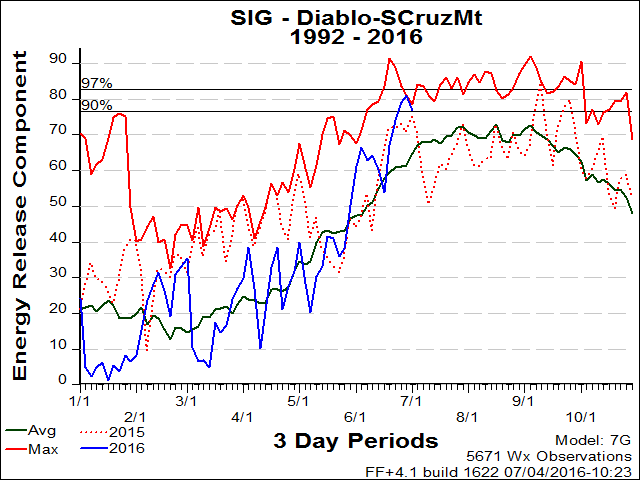
The Energy Release Component (ERC) is an NFDRS
(National Fire Danger Rating System) index related to how
hot a fire could burn. It is directly related to the 24-hour,
potential worst case, total available energy (BTUs) per unit area
(in square feet) within the flaming front at the head of a fire.
The ERC can serve as a good characterization
of fire season as it tracks seasonal fire danger trends well.
The ERC is a function of the fuel model and live and dead fuel
moistures. Fuel loading, woody fuel moistures, and larger fuel
moistures all have an influence on the ERC, while the lighter
fuels have less influence and wind speed has none. ERC has low
variability, and is the best fire danger component for indicating
the effects of intermediate to long-term drying on fire behavior
(if it is a significant factor) although it is not intended for
use as a drought index.
Charts from each Forest Service severity weather
station are arranged generally from the northern part of the Geographic
Area to the southern part. Severity stations are those weather
stations which represent the fire danger conditions on the Forest
Unit. Because the Wet Flag was not recorded in AFFIRMS Data prior to mid-1993, these
analyses start in 1994 and provide over 18 years of data. In addition, current and last years' data are graphed as auxillary runs to better provide recent comparative data to historical indicies.
Northwestern Mountains
» Eastside » Northeastern
Mountains » Northern Sierra »
North Coast » Sacramento
Valley » Mid Coast » Bay-Marine » Diablo Range-Santa Cruz Mtns.


![[Graphic] - Your First Click to the Federal Government Website](http://gacc.nifc.gov/oscc/images/logo_fg.gif)
![[graphic] Color Curve](../../../../images/content1.gif)